- News
- Sport
- Politics
- Sci/Tech
- Showbiz
- Health
- Business
- Art
- Fashion
- Education
- Weather
- Automotive
- Aviation
- Religious
- Crime


Punjabi. Punjabi, sometimes spelled Panjabi, is an Indo-Aryan language native to the Punjab region of Pakistan and India. It is one of the most widely spoken native languages in the world, with approximately 150 million native speakers.

Mandarin. Mandarin is the largest branch of the Sinitic languages. Mandarin varieties are natively spoken by 70 percent of all Chinese speakers, spread over a large geographical area that stretches from Yunnan in the southwest to Xinjiang in the northwest and Heilongjiang in the northeast. Its spread is generally attributed to the overall greater ease of travel in the North China Plain compared to the more mountainous south, combined with the relatively recent spread of northern varieties to frontier areas.
Many varieties of Mandarin, such as those of the Southwest and the Lower Yangtze, are not mutually intelligible with the Beijing dialect. Nevertheless, Mandarin as a group is often placed first in lists of languages by number of native speakers. Because Mandarin originated in North China and most Mandarin varieties are found north of the Yangtze River, the group is sometimes referred to as Northern Chinese.

Korean. Korean is the native language for about 81 million people, mostly of Korean descent. It is the national language of both North Korea and South Korea. In the south, the language is known as Hangugeo and in the north, it is known as Chos??n??. Since the turn of the 21st century, Korean popular culture has spread around the world through globalization and cultural exports. Korean uses the Hangul alphabet.


Kazakh. Kazakh is a Turkic language of the Kipchak branch spoken in Central Asia by the Kazakhs. It is closely related to Nogai, Kyrgyz and Karakalpak. It is the official language of Kazakhstan, and has official status in the Altai Republic of Russia. It is also a minority language in the Ili Kazakh Autonomous Prefecture in Xinjiang, China, and in the Bayan-??lgii Province of western Mongolia. The language is also spoken by many ethnic Kazakhs throughout the former Soviet Union, Germany, and Turkey.


Uzbek. Uzbek is a Karluk Turkic language spoken by Uzbeks. It is the official and national language of Uzbekistan and formally succeeded Chagatai, an earlier Karluk language endonymically called T??rki or T??rk??e, as the literary language of Uzbekistan in the 1920s.


Tatar. Tatar is a Turkic language spoken by the Tatars mainly located in modern Republic of Tatarstan, wider Volga-Ural region, as well as many other regions of Russia. Tatar belongs to the Kipchak branch of Turkic languages, the same branch as Bashkir, Kazakh, Nogai and Kyrgyz.

Standard Chinese. Standard Chinese, often colloquially called Mandarin Chinese, is the modern standardized form of Mandarin Chinese, largely based on the Beijing dialect. It is the official lingua franca of the People's Republic of China, one of the six official languages of the United Nations and one of the four official languages of Singapore, and one of the national languages of Taiwan. It is a pluricentric language with local variations in Mainland China, Taiwan and Singapore, which mainly differ in accent and lexicon.

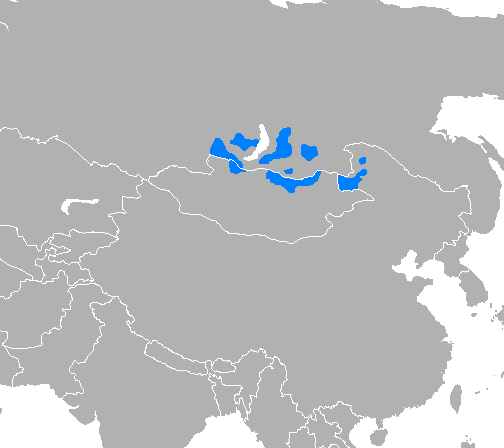


Portuguese. Portuguese is a Western Romance language of the Indo-European language family originating from the Iberian Peninsula of Europe. It is spoken chiefly in Portugal, in Brazil, and in several African countries, as well as by immigrants in North America, Europe, and South America. With approximately 267 million speakers, it is listed as the fifth-most spoken native language.
Showing 1-16
of 16 items.