- News
- Sport
- Politics
- Sci/Tech
- Showbiz
- Health
- Business
- Art
- Fashion
- Education
- Weather
- Automotive
- Aviation
- Religious
- Crime
1 image
Silesian
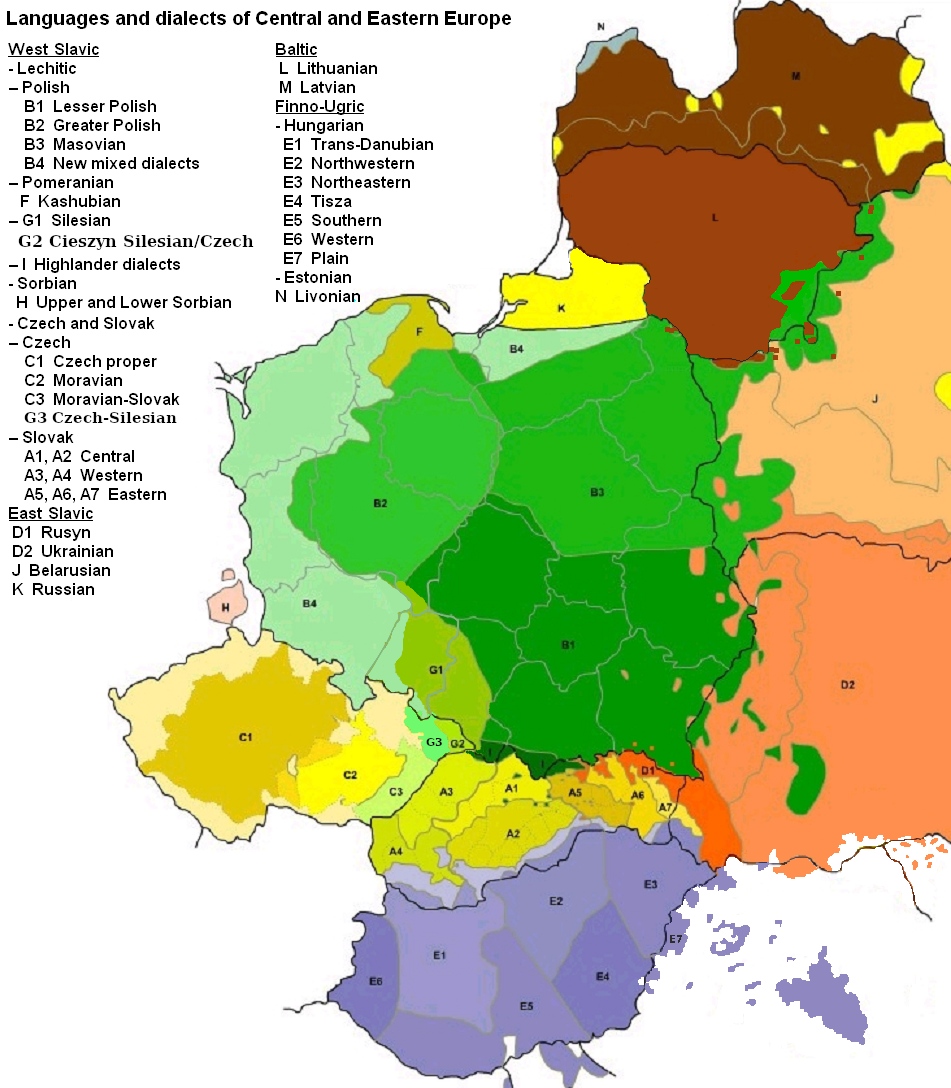
Silesian, occasionally called Upper Silesian, is an ethnolect of the Lechitic group spoken in Upper Silesia. While having secured some international recognition as a language, there is a debate on whether Silesian is either a dialect of Polish or a distinct language, and if Silesians are either a regional ethnic group within the Polish nation or a distinct ethnic minority that historically emerged, but later diverged from, the Polish people. Some Silesians identify as a regional ethnic group within the Polish nation, while others view themselves as a distinct ethnic minority. Its vocabulary was significantly influenced by Central German due to the existence of numerous Silesian German speakers in the area prior to World War II and after. The first mentions of Silesian as a distinct lect date back to the 16th century, and the first literature with Silesian characteristics to the 17th century.
e: 34120823143820151
Strings (4)
-
str_k__gdb_alternateName
str.gdb:alternateNameUpper Silesian|Silesian language|Silesian dialect -
str_k__gdb_image
str.gdb:imagehttps://upload.wikimedia.org/wikipedia/commons/1/15/Languages_of_CE_Europe-3.PNG -
str_k__gdb_languageCode639_3
str.gdb:languageCode639_3szl -
str_k__rdfs_comment
str.rdfs:commentSilesian, occasionally called Upper Silesian, is an ethnolect of the Lechitic group spoken in Upper Silesia. While having secured some international recognition as a language, there is a debate on whether Silesian is either a dialect of Polish or a distinct language, and if Silesians are either a regional ethnic group within the Polish nation or a distinct ethnic minority that historically emerged, but later diverged from, the Polish people. Some Silesians identify as a regional ethnic group within the Polish nation, while others view themselves as a distinct ethnic minority. Its vocabulary was significantly influenced by Central German due to the existence of numerous Silesian German speakers in the area prior to World War II and after. The first mentions of Silesian as a distinct lect date back to the 16th century, and the first literature with Silesian characteristics to the 17th century.