- News
- Sport
- Politics
- Sci/Tech
- Showbiz
- Health
- Business
- Art
- Fashion
- Education
- Weather
- Automotive
- Aviation
- Religious
- Crime

Punjabi. Punjabi, sometimes spelled Panjabi, is an Indo-Aryan language native to the Punjab region of Pakistan and India. It is one of the most widely spoken native languages in the world, with approximately 150 million native speakers.


Armenian. Armenian is the sole member of an independent branch in the Indo-European language family. It is the native language of the Armenian people and the official language of Armenia. Historically spoken in the Armenian highlands, today Armenian is also widely spoken throughout the Armenian diaspora. Armenian is written in its own writing system, the Armenian alphabet, introduced in 405??AD by Mesrop Mashtots. The estimated number of Armenian speakers worldwide is between five and seven million.

Pashto. Pashto is an Eastern Iranian language, belonging to the Indo-European language family, natively spoken in northwestern Pakistan and southern and eastern Afghanistan. It is one of the two official languages of Afghanistan. In historical Persian literature, it was also referred to as Afghani.


Slovene. Slovene or Slovenian is a South Slavic language of the Balto-Slavic branch of the Indo-European language family. Most of its 2.5 million speakers are the inhabitants of Slovenia, the majority of them ethnic Slovenes. As Slovenia is part of the European Union, Slovene is also one of its 24 official and working languages. Its grammar is highly fusional, and it has a dual grammatical number, an archaic feature shared with some other Indo-European languages. Two accentual norms are used. Its flexible word order is often adjusted for emphasis or stylistic reasons, although basically it is an SVO language. It has a T???V distinction: the use of the V-form demonstrates a respectful attitude towards superiors and the elderly, while it can be sidestepped through the passive form.



Yiddish. Yiddish, historically Judeo-German or Jewish German, is a West Germanic language historically spoken by Ashkenazi Jews. It originated in the Holy Roman Empire during the Middle Ages, and provided the nascent Ashkenazi community with a vernacular based on High German fused with many elements taken from Hebrew and to some extent Aramaic. Most varieties of Yiddish include elements of Slavic languages, and the vocabulary contains traces of Romance languages. Yiddish has traditionally been written using the Hebrew alphabet.


Greek. Greek is an Indo-European language, constituting an independent Hellenic branch within the Indo-European language family. It is native to the territories that have had populations of Greeks since antiquity: Greece, Cyprus, Egypt, Turkey, Italy, southern Albania, and other regions of the Balkans, Caucasus, the Black Sea coast, and the Eastern Mediterranean. It has the longest documented history of any Indo-European language, spanning at least 3,400 years of written records. Its writing system is the Greek alphabet, which has been used for approximately 2,800 years; previously, Greek was recorded in writing systems such as Linear B and the Cypriot syllabary.


Azerbaijani. Azerbaijani or Azeri is a Turkic language from the Oghuz sub-branch. It is spoken primarily by the Azerbaijani people, who are native to the Azerbaijan region of Iran, as well as the Republic of Azerbaijan. The Iranian Azerbaijanis speak South Azerbaijani, while the ones in the Republic speak North Azerbaijani; but it is unclear whether these two varieties form one language, as the International Organization for Standardization (ISO) considers Northern and Southern Azerbaijani to be distinct languages.

Spanish. Spanish or Castilian is a Romance language of the Indo-European language family that evolved from the Vulgar Latin spoken on the Iberian Peninsula of Europe. It originated in the Kingdom of Castile, a historical kingdom in north-central Spain. Today, it is a global language with 519 million native speakers, mainly in the Americas and Spain, and about 636 million speakers total, including second-language speakers. Spanish is the official language of 20 countries, as well as one of the six official languages of the United Nations. Spanish is the world's second-most spoken native language after Mandarin Chinese; the world's fourth-most spoken language overall after English, Mandarin Chinese, and Hindustani (Hindi-Urdu); and the world's most widely spoken Romance language. The country with the largest population of native speakers is Mexico.


Russian. Russian is an East Slavic language belonging to the Balto-Slavic branch of the Indo-European language family. It is one of the four extant East Slavic languages, and is the native language of the Russian people. Russian was the de facto and de jure official language of the former Soviet Union. It has remained an official language of the Russian Federation, Belarus, Kazakhstan, Kyrgyzstan, and Tajikistan, and is still commonly used as a lingua franca in Ukraine, Moldova, the Caucasus, Central Asia, and to a lesser extent in the Baltic states and Israel.

English. English is a West Germanic language of the Indo-European language family that emerged in early medieval England and has since become a global lingua franca. The namesake of the language is the Angles, one of the Germanic peoples who migrated to Britain after the end of Roman rule. English is the most spoken language in the world, primarily due to the global influences of the former British Empire and the United States. It is the most widely learned second language in the world, with more second-language speakers than native speakers. However, English is only the third-most spoken native language, after Mandarin Chinese and Spanish.
xxx_gdb_Language
Antigua & Barbuda
Australia
Bahamas
Bahrain
Barbados
Belize
Bhutan
Botswana
Brunei
Cambodia
Cameroon
Canada
Dominica
Eritrea
Eswatini
Ethiopia
Fiji
Gambia
Ghana
Grenada
Guyana
India
Indonesia
Ireland
Israel
Jamaica
Kenya
Kiribati
Lebanon
Lesotho
Liberia
Madagascar
Malawi
Malaysia
Maldives
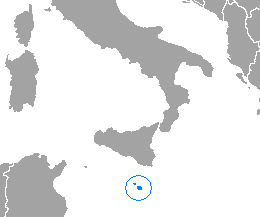
Malta
Marshall Islands
Mauritius
Micronesia
Namibia
Nauru
New Zealand
Nigeria
Oman
Pakistan
Palau
Papua New Guinea
Philippines
Rwanda
Samoa
Seychelles
Sierra Leone
Singapore
Solomon Islands
South Africa
South Sudan
Sri Lanka
St Kitts & Nevis
St Lucia
St Vincent & Grenadines
Sudan
Tanzania
Tonga
Trinidad & Tobago
Tuvalu
Uganda
United Arab Emirates
United Kingdom
United States
Vanuatu
Zambia
Zimbabwe

French. French is a Romance language of the Indo-European family. Like all other Romance languages, French and its closest relatives???the langues d'o??l, historically spoken in northern France and southern Belgium???descended from the Vulgar Latin of the Roman Empire. Over time, French largely supplanted these regional relatives.
xxx_gdb_Language
Algeria
Andorra
Belgium
Benin
Burkina Faso
Burundi
Cambodia
Cameroon
Canada
Central African Rep.
Chad
Comoros
Dem. Rep. of Congo
Djibouti
Equatorial Guinea
France
Gabon
Guinea
Haiti
India
Italy
Ivory Coast
Laos
Lebanon
Luxembourg
Madagascar
Mali
Mauritania
Mauritius
Monaco
Morocco
Niger
Rep. of Congo
Rwanda
Senegal
Seychelles
Switzerland
Togo
Tunisia
United States
Vanuatu
Vietnam
Showing 1-24
of 24 items.